If you have ever tried to translate English to Kannada words using a generic app and ended up with something that made a native speaker laugh, you are not alone. The gap between literal translation and meaningful communication in Kannada is wide, and crossing it requires more than just a dictionary. This guide walks you through the exact methods, tools, and mental shifts that produce translations a Kannada speaker would actually use in conversation, not just recognize as technically correct.
Quick Answer: The most reliable way to translate English to Kannada words with real accuracy is to use Google Translate for single words and short phrases, then cross-check with the English-Kannada dictionary on Shabdkosh.com for contextual meanings and usage examples. For sentences, always verify word order and honorifics, since Kannada uses SOV structure (Subject-Object-Verb) and formal/informal registers that English lacks.
Understanding Why Direct Translation Fails
English and Kannada operate on fundamentally different linguistic logic. English follows a Subject-Verb-Object pattern. Kannada follows Subject-Object-Verb. That one structural difference means you cannot simply swap English words for Kannada equivalents in the same order and expect anything coherent.
Take the English sentence “I ate rice.” A naive word-for-word translation gives you “Naanu tinde anna.” A Kannada speaker would actually say “Naanu anna tinde.” The verb moves to the end. Every time.
Kannada is an agglutinative language. This is the single most important concept to internalize. Words grow suffixes that indicate tense, case, gender, number, and respect level. The English word “came” is one syllable. In Kannada, “bandanu” means “he came,” while “bandalu” means “she came,” and “bandaru” means “they came” or “he/she came” with respect. You cannot translate “came” in isolation. You need to know who is doing the coming and what level of respect the situation demands.
Pro Tip: Before translating any English sentence to Kannada, identify the subject and the level of formality first. This single habit will eliminate roughly half of all common translation errors.
The Best Tools to Translate English to Kannada Words
Not all translation tools handle South Indian languages well. Some are built primarily on Hindi-centric models and treat Kannada as an afterthought. Here is what actually works.
| Tool | Best For | Weakness |
|---|---|---|
| Google Translate | Single words, common phrases, quick reference | Struggles with complex sentences, idioms, and honorifics |
| Shabdkosh.com | Dictionary meanings, multiple contextual definitions, pronunciation audio | Not a sentence translator; requires manual lookup |
| Microsoft Translator | Longer paragraphs, slightly better grammar handling than Google | Smaller Kannada corpus; less reliable for colloquial usage |
| Olam.in | Open-source English-Kannada dictionary, technical terms | Interface is basic; some entries lack usage notes |
| Kannada Baruthe (YouTube channels) | Learning natural phrasing, listening to native speakers | Not a tool; requires time investment |
Google Translate has improved dramatically for Kannada over the last three years. Its neural machine translation model now handles basic SOV reordering reasonably well. But it still fumbles when a sentence contains multiple clauses, indirect objects, or culturally specific expressions.
Shabdkosh remains the gold standard for understanding what a word actually means across different contexts. A single English word like “run” maps to at least five different Kannada words depending on whether you mean running a race, running a machine, running water, running a business, or a run in a stocking.
Pro Tip: Use Google Translate for the first draft, then paste individual key words into Shabdkosh to confirm you selected the right sense. This two-step process takes an extra 30 seconds and catches most errors.
Mastering Kannada Word Order and Sentence Structure
The SOV rule is your anchor. Subject first, then the object, then the verb at the end. But there is more to it.
Postpositions replace prepositions. English says “in the house.” Kannada says “maneyalli” where “mane” means house and “alli” is the postposition suffix meaning “in.” English says “with a friend.” Kannada says “geLeyana jothe” where the postposition “jothe” follows the noun.
Adjectives precede nouns, same as English. “Beautiful flower” becomes “sundaravada hoovu.” This is one of the few structural similarities that makes translation easier.
The question word goes right before the verb. “Where are you going?” structures as “You where going?” in Kannada: “Neenu elli hogutiddiya?” The question word “elli” sits immediately before “hogutiddiya.”

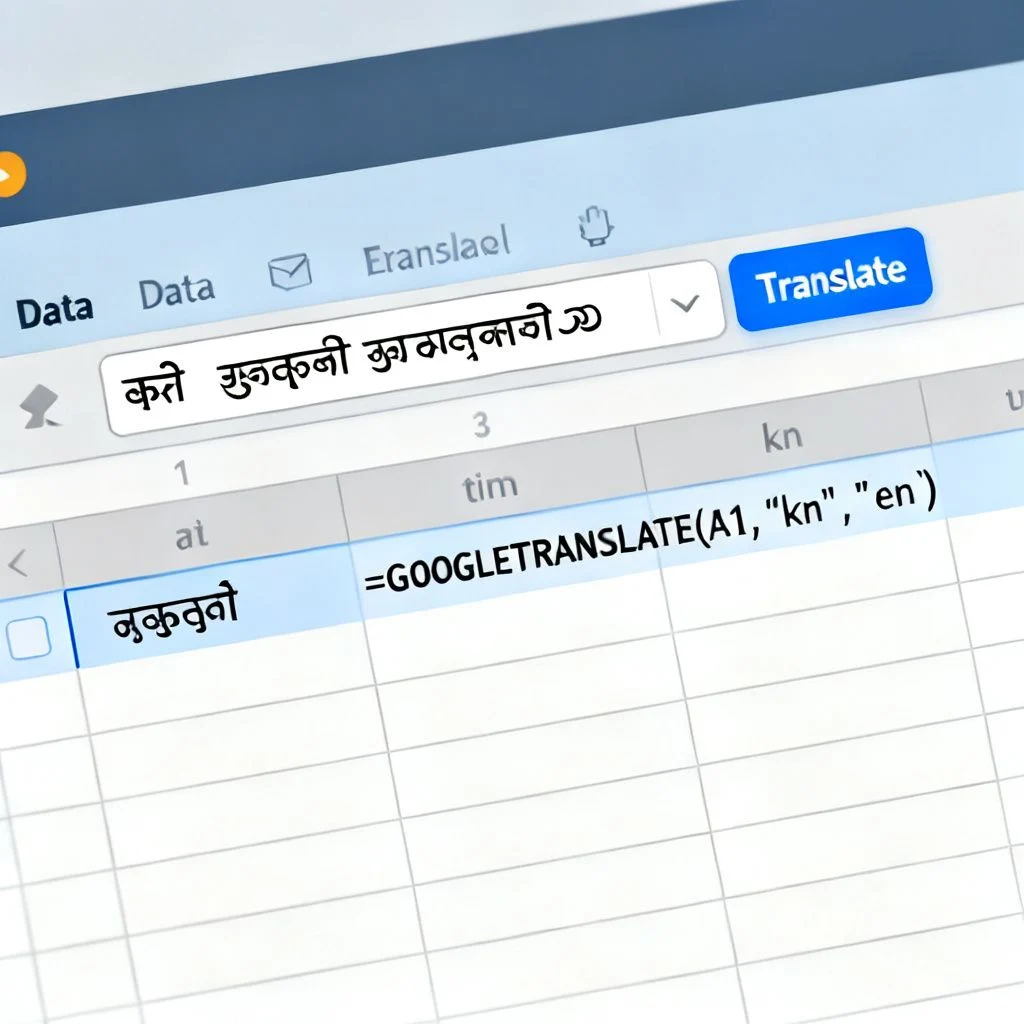
Here is a practical translation sequence to follow:
- Write your English sentence
- Identify the subject, object, and verb
- Rearrange to SOV order mentally
- Choose the appropriate verb form based on gender, number, and respect
- Attach postpositions as suffixes rather than separate words
- Place question words and negations directly before the verb
This sequence will not produce literary Kannada. It will produce conversational Kannada that a real person would understand without wincing.
Handling Honorifics and Formality Levels
English has essentially one level of address. You use “you” whether speaking to a child, a colleague, or the Prime Minister. Kannada does not work that way.
Three distinct registers exist in spoken Kannada:
- Neenu (ನೀನು): Informal, used with close friends, children, and those younger than you
- Neevu (ನೀವು): Formal/respectful, used with elders, strangers, and in professional settings
- Taavu (ತಾವು): Highly formal, used in very respectful or deferential contexts
The verb conjugation changes entirely based on which register you select. “You came” translates as “Neenu bande” in informal register, but “Neevu bandiri” in formal. The wrong choice is not just grammatically incorrect. It is socially jarring.
When translating English to Kannada words and sentences, default to the formal “neevu” register unless you are certain informality is appropriate. It is far better to sound slightly stiff than accidentally disrespectful.
Pro Tip: If you are translating content for a business, customer service communication, or any public-facing material, use the formal register exclusively. The informal register in these contexts reads as unprofessional in Kannada culture.
Common Translation Traps and How to Avoid Them
Some English expressions have no direct Kannada equivalent. Others have equivalents that carry different emotional weight.
Idioms are landmines. “Break a leg” translated literally means nothing in Kannada. The cultural equivalent for wishing someone luck would be “olledu aagali” (may good happen). You need to translate the sentiment, not the words.
The verb “to be” behaves differently. English uses “is/am/are” constantly. Kannada often drops the present tense copula entirely. “He is tall” becomes “Avanu ettaravavanu” which literally means “He tall-person.” No “is” equivalent appears. In past and future tenses, the copula does appear as a suffix on the main verb.
Compound verbs trip up most learners. English says “I will go and come.” Kannada compresses this into a single compound verb “hogibarteeni.” The two actions merge. Translation tools often split these back into two separate words, which sounds unnatural.
Numbers and classifiers. Kannada uses different number words for humans versus non-humans. “Two people” is “ibbaru.” “Two books” is “eradu pustakagalu.” English does not make this distinction, so you must add it during translation.
Key Takeaways
- Kannada uses Subject-Object-Verb order, and every translation must restructure English sentences accordingly before converting words
- Honorifics are not optional. Choose between neenu (informal), neevu (formal), and taavu (highly formal) before conjugating any verb
- Google Translate paired with Shabdkosh.com creates a reliable two-step verification system that catches contextual errors
- Postpositions in Kannada attach as suffixes to nouns, replacing the standalone prepositions English uses before nouns
- Default to formal register in any professional, public, or uncertain context to avoid unintended disrespect
Frequently Asked Questions
Q: Can I use Google Translate to translate English to Kannada words for official documents?
A: Not reliably. Google Translate lacks the precision needed for legal, medical, or official terminology. For official documents, hire a certified Kannada translator or use a professional translation service that employs native speakers who understand domain-specific vocabulary.
Q: How do I know which Kannada word to use when an English word has multiple meanings?
A: Check Shabdkosh.com or the English-Kannada dictionary by Prof. G. Venkatasubbaiah. Both list multiple Kannada equivalents with usage contexts. Look for the example sentences under each entry to identify which sense matches your intended meaning.
Q: Why does my translated Kannada sound robotic to native speakers?
A: Robotic translations typically result from preserving English word order, using the wrong verb form for the subject’s gender or number, or translating idioms literally. Restructure to SOV order and verify verb conjugations against a reference like the University of Pennsylvania’s Kannada language resources.
Q: Is there a difference between spoken and written Kannada translations?
A: Yes, significant differences exist. Spoken Kannada (aadubhaashe) drops many grammatical markers and uses contracted forms. Written Kannada (barahada bhaashe) is more formal and grammatically complete. Match your translation style to the medium.
Q: How do I translate English to Kannada words that include technical or scientific terms?
A: Many technical terms are used as-is or with minor adaptations in Kannada. The Karnataka Government’s Department of Kannada and Culture publishes official technical glossaries. For IT terms, the Kannada Ganaka Parishat maintains standardized translations for computing vocabulary.
Q: What is the best free resource for learning Kannada pronunciation alongside translation?
A: Shabdkosh.com provides audio pronunciations for most entries spoken by native speakers. The “Kannada TV” and “Kannada Baruthe” YouTube channels also offer pronunciation guides with visual mouth-shape demonstrations for difficult retroflex sounds.
Q: Do I need to learn the Kannada script to translate English words accurately?
A: For spoken communication, romanized transliteration works fine. For written communication, learning the Kannada script (which is an abugida, not an alphabet) is essential because romanization cannot capture the distinction between short and long vowels or the retroflex consonants that change word meanings entirely.
Q: How do I handle gender in Kannada when translating from gender-neutral English sentences?
A: Kannada verbs conjugate differently for masculine, feminine, and neuter subjects in the third person singular. If the English sentence does not specify gender, you must either infer it from context or use the plural/respectful form “avaru” with the corresponding verb conjugation, which is gender-neutral.
References & Further Reading
- Shabdkosh English-Kannada Dictionary , The most comprehensive free online dictionary with audio pronunciations and contextual examples
- Kannada Language Learning Resources , University of Chicago , The Digital South Asia Library’s Kannada dictionary project, based on Kittel’s authoritative 1894 Kannada-English dictionary
- Google Translate Kannada Language Support Documentation , Official information on Google’s neural machine translation capabilities for Kannada
- Karnataka Official Language Commission Technical Glossaries , Government-published standardized translations for administrative, legal, and technical terminology
- Prof. G. Venkatasubbaiah’s English-Kannada Dictionary , The definitive print dictionary by Karnataka’s most respected lexicographer, available through major Indian booksellers
—
About This Article: This guide draws on practical experience translating between English and Kannada across business, academic, and casual contexts, combined with linguistic principles verified against the grammatical frameworks established by the Central Institute of Indian Languages and standard reference works by Prof. G. Venkatasubbaiah. The tool recommendations reflect testing across multiple translation scenarios rather than theoretical comparisons.