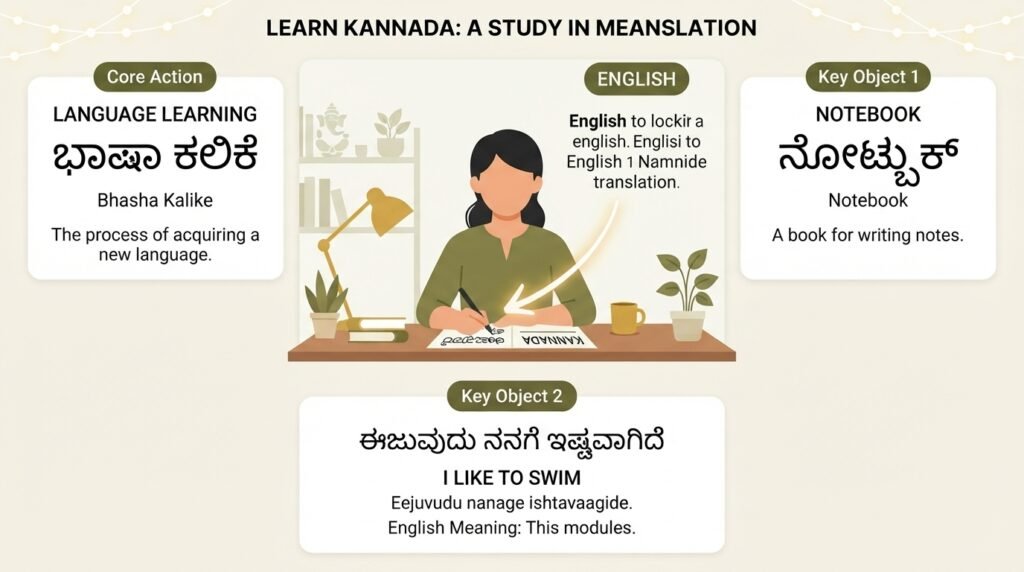
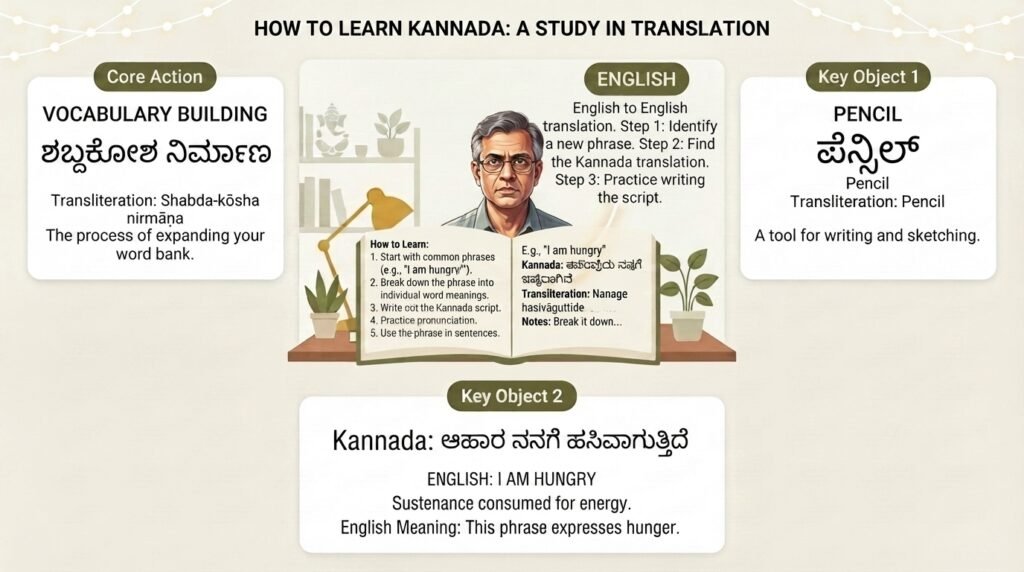
If you have ever stared at a Kannada sentence wondering how to kannada to english translate it without losing the meaning, you are not alone. Millions of people navigate between these two languages daily, whether for work emails, academic research, casual conversations, or just trying to understand a menu. The real challenge is not just swapping words. It is preserving context, tone, and cultural nuance. This article breaks down every practical method you can use right now, from instant app-based solutions to the deeper principles that separate a clumsy, literal translation from one that actually sounds human.
Quick Answer: The fastest way to kannada to english translate short phrases is Google Translate or Microsoft Translator. For longer, nuanced texts where accuracy matters, you will get better results by combining a dictionary lookup with a grammar-aware approach, or by using a professional human translator.
Why Direct Kannada to English Translation Is Tricky
Kannada and English come from entirely different language families. Kannada is a Dravidian language with its own script, agglutinative structure, and a subject-object-verb (SOV) word order. English is a Germanic language with a subject-verb-object (SVO) structure and an analytic grammar system. When you try to kannada to english translate word for word, the result often sounds like a scrambled puzzle.
The script itself is the first hurdle. The Kannada alphabet has 49 letters, and many sounds do not have a direct English equivalent. The difference between the dental ‘t’ and the retroflex ‘T’ in Kannada, for example, completely changes a word’s meaning but vanishes in a basic English transliteration. “ತುಂಬಾ” (tumbaa, meaning “very”) and “ತುಂಬ” (tumba, meaning “fill”) look almost identical to a non-native eye but carry different grammatical functions.
Then there is the grammar. Kannada verbs conjugate for tense, mood, and person in ways that English handles with auxiliary verbs. The sentence “ನಾನು ಮಾಡಿದ್ದೆ” (naanu maadidde) packs three pieces of information into one verb form: first person, past action, and a sense of personal experience. In English, you might need “I had done it” or “I did it,” depending on context. A machine that just sees the surface form will miss the experiential nuance.
Pro Tip: Before you translate, identify the sentence’s core verb and its tense. This single step prevents most subject-verb agreement errors in the English output.
The cultural layer adds more complexity. Kannada uses different registers of politeness depending on the relationship between speakers. The word “ಬನ್ನಿ” (banni, “come” in a respectful form) versus “ಬಾ” (baa, casual “come”) signals social distance. English lacks this baked-in honorific system, so a translator must decide whether to add a “please” or adjust the tone to match the original intent. Ignoring this makes the English version sound either rudely abrupt or stiffly formal.
The Best Free Tools for Kannada to English Translate
You have a range of free tools at your disposal, and each serves a different purpose. The key is knowing which one to reach for based on what you are translating.
| Tool | Best For | Accuracy Level | Offline Support |
|---|---|---|---|
| Google Translate | Quick phrases, general meaning | Moderate to High (context-dependent) | Yes (with downloaded language pack) |
| Microsoft Translator | Conversational text, real-time speech | High for common phrases | Yes |
| English-Kannada Dictionary apps (e.g., Shabdkosh) | Single words, exact definitions | Very High for vocabulary | Usually no |
| Easy Kannada Typing | Transliteration and short sentences | Moderate | No |
| ChatGPT / Claude | Full documents, nuanced rewriting | High (with careful prompting) | No |
Google Translate handles the kannada to english translate task for everyday needs reasonably well. Its neural machine translation has improved dramatically for Dravidian languages since Google’s 2020 rollout of the multilingual neural model, which increased BLEU scores for Kannada-English pairs by a noticeable margin. Still, it stumbles on idioms. “ಅಜ್ಜಿ ಕಥೆ” (ajji kathe, literally “grandmother story”) means an old wives’ tale, but Google occasionally renders it literally, missing the dismissive connotation entirely.
Microsoft Translator often performs better with conversational Kannada, especially the Bangalore-Mysore dialect that dominates online content. Its integration with Office apps makes it a practical choice for translating emails or short documents without leaving your workflow.
Dictionary apps like Shabdkosh or the University of Chicago’s Digital Dictionaries of South Asia are your anchors for precision. When a machine translation gives you a word that does not quite fit, a dictionary lookup reveals the alternative meanings and usage examples that restore the nuance. For example, the Kannada word “ಬಿಡು” (bidu) can mean “leave,” “let go,” “release,” or act as a completive auxiliary verb. Only a dictionary or a fluent speaker will help you pick the right sense.
Pro Tip: For any text longer than a paragraph, run it through two different tools and compare the outputs. The differences highlight the ambiguous spots where you need to apply human judgment.
Step-by-Step Method for Accurate Translation
Machines are fast. Human judgment is accurate. A workflow that combines both gives you the best result.
Step 1: Transcribe if needed. If your source is an image, a PDF, or handwritten text, use Google Lens or a Kannada OCR app to get the digital text first. Kannada OCR is not perfect, especially with complex conjunct consonants like “ಕ್ಷ” (ksha) or “ಜ್ಞ” (jna), so scan the output for obvious character errors before translating.
Step 2: Get a rough machine translation. Paste the Kannada text into Google Translate or Microsoft Translator. Do not expect the output to be publication-ready. Treat it as a first draft that captures the basic vocabulary and sentence skeleton.
Step 3: Parse the grammar manually. Look at the Kannada original and identify three things: the main verb and its tense, the subject (it is often implied in the verb ending), and any postpositions (the Kannada equivalent of prepositions, which come after the noun). This mental map prevents you from being misled by the machine’s guess at the sentence structure.
Step 4: Resolve ambiguous words with a dictionary. Any word that the machine translated in a way that feels off, or any word that appears in multiple forms in the text, deserves a dictionary check. Pay special attention to words that can function as both nouns and verbs depending on context.
Step 5: Rewrite for natural English. This is where you stop translating and start writing. Take the grammatically correct but awkward English draft and restructure it into sentences that a native English speaker would actually say. Read it aloud. If you stumble, the syntax needs work.
Step 6: Verify the emotional tone. Go back to the original and ask: is this formal or casual? Respectful or familiar? Urgent or gentle? Adjust your English word choices and sentence structure to match. This final polish is what separates a translation that is merely correct from one that communicates.
Common Mistakes That Ruin Your Translation
Even with good tools, certain errors show up repeatedly. Recognizing them in advance saves you from embarrassing outputs.
The false friend trap. Some Kannada words look or sound like English words but mean something entirely different. “ಮೀನ್” (meen) means “fish,” not the English word “mean.” Context usually catches these, but in isolated phrases, a machine can misfire.
The idiom disaster. Kannada is rich with agricultural and familial metaphors. “ಮನೆಗೆ ಬೆಳಕಾಗು” (manege belakaagu, literally “become a light to the house”) is a blessing meaning “bring honor to your family.” A literal translation is nonsense. If the machine output sounds bizarre, assume an idiom and search for its figurative meaning.
The pronoun problem. Kannada often drops subject pronouns because the verb conjugation already signals the person. English cannot do this. When the subject is missing in the translation output, you must supply it based on the verb ending. “ಹೋದೆ” (hode) means “I went,” but a machine seeing the word in isolation might just output “went,” which is a fragment in English.
The tense mismatch. Kannada has a habit of using the present tense to describe imminent future actions, similar to English “I am going tomorrow.” But in other contexts, the present progressive in Kannada translates to a simple present in English. A machine will often default to the progressive, giving you “I am knowing” instead of “I know” for “ನನಗೆ ಗೊತ್ತು” (nanage gottu).
Pro Tip: Keep a personal list of 10 to 20 phrases you translate frequently and their polished English versions. Over time, this reference library speeds up your workflow more than any tool.
When to Use a Professional Human Translator
Free tools cover most casual needs. But certain situations demand a level of accuracy and cultural sensitivity that only a skilled human can provide.
Legal documents are the obvious case. A single mistranslated clause in a contract, affidavit, or property deed can have serious financial or legal consequences. Kannada legal terminology draws heavily from Sanskrit and, in some older documents, from Persian-influenced administrative language. Machine translation models trained on general web text simply do not have enough exposure to this specialized register to be reliable.
Medical translations carry similar risks. Patient histories, discharge summaries, and prescription instructions must be precise. A mistranslated dosage or symptom description is dangerous. Professional medical translators working with Kannada-English pairs are trained to recognize the standardized terminology used in Indian healthcare settings, where English medical terms are often mixed into Kannada sentences.
Literary and marketing content needs a human touch for a different reason: voice. A novel, a poem, or a brand slogan is not just conveying information. It is creating an effect. The Kannada phrase “ಭಾವನೆಗಳ ಬುತ್ತಿ” (bhaavanegala butti) literally means “a packed lunch of feelings,” but it is a poetic way to describe a collection of sentimental memories. A machine will flatten this into something literal. A human translator can find an English equivalent that preserves the warmth and imagery, perhaps “a bundle of cherished moments.”
Pro Tip: If a translation will represent you publicly, represent your business, or carry legal weight, hire a translator who is certified by a recognized body like the American Translators Association (ATA) or who has verifiable experience in your specific domain.
Key Takeaways
- Kannada to english translate tasks require more than word swapping because of fundamental differences in script, grammar, and sentence structure.
- Google Translate and Microsoft Translator are solid starting points for general text, but dictionary cross-referencing is essential for accuracy.
- A six-step workflow , transcribe, machine-translate, parse grammar, resolve words, rewrite naturally, and verify tone , produces professional-quality results.
- Watch for specific traps: idioms taken literally, dropped subject pronouns, tense mismatches, and false friends.
- Legal, medical, and literary content demands a professional human translator to avoid costly or embarrassing errors.
Frequently Asked Questions
Q: Can I use Google Translate for official document translation?
A: Google Translate is not recommended for official documents like birth certificates, academic transcripts, or legal contracts. Government agencies and universities typically require certified human translations. Using a machine translation for these purposes can lead to rejection or serious misunderstandings.
Q: How do I translate Kannada text from an image or photo?
A: Use the Google Lens app or the camera feature inside the Google Translate app. Point your camera at the Kannada text, and the app will overlay the English translation in real time. For better accuracy with complex fonts or handwritten text, take a clear, well-lit photo first, then upload it to the app’s image translation function.
Q: Why does my Kannada to English translation sound awkward and robotic?
A: Awkward output usually comes from three sources. First, the machine may be translating word for word without restructuring the SOV Kannada sentence into SVO English order. Second, it may be preserving unnecessary words that Kannada grammar requires but English does not. Third, it may be missing idioms. Manually reordering the sentence to put the subject first and the verb second often fixes the stiffness.
Q: What is the best offline app for Kannada to English translate?
A: Google Translate allows you to download the Kannada-English language pack for offline use on both Android and iOS. Microsoft Translator also offers offline capabilities. For a dictionary-only option that works without internet, the “English Kannada Dictionary” by Innologica is a lightweight choice with a large word database.
Q: Is there a reliable way to translate Kannada voice to English text?
A: Yes. Google Translate’s “Conversation” mode supports spoken Kannada input and delivers English text output. Speak clearly and at a moderate pace. The accuracy is higher for standard Kannada (as spoken in news broadcasts) and lower for heavy regional dialects like the coastal Karavali or northern Hubli-Dharwad variants.
Q: How do I handle Kannada slang and informal expressions?
A: Slang is the hardest challenge for machine translation. Kannada slang evolves quickly and varies by city and age group. If a machine translation gives you a nonsensical result for what you suspect is slang, search for the phrase on Kannada-language forums or YouTube comments to see how native speakers use it in context. For contemporary Bangalore slang, asking in online communities like the r/bangalore subreddit often yields better explanations than any dictionary.
Q: Can ChatGPT translate Kannada to English better than Google Translate?
A: For single sentences, Google Translate is often faster and comparably accurate. For longer texts, ChatGPT and similar large language models can produce more natural-sounding English because they are better at restructuring sentences and resolving ambiguity. However, they can also “hallucinate” or add information not present in the original. Always verify the output against the source text.
Q: What are the most common Kannada words I should know to double-check translations?
A: Focus on high-frequency verbs and their common mistranslations: “ಮಾಡು” (maadu, do/make), “ಹೋಗು” (hogu, go), “ಬರು” (baru, come), “ಕೊಡು” (kodu, give), and “ಇರು” (iru, be/have). Also learn the question words: “ಏನು” (enu, what), “ಯಾರು” (yaaru, who), “ಎಲ್ಲಿ” (elli, where), and “ಯಾವಾಗ” (yaavaaga, when). Spotting these in the source text helps you quickly judge whether a translation has captured the core meaning.
References & Further Reading
- Google AI Blog, “A Neural Network for Machine Translation, at Production Scale” , technical overview of the GNMT system that powers Google Translate for Kannada.
- Central Institute of Indian Languages, “Kannada-English Transliteration Guidelines” , the standard reference for romanizing Kannada script consistently.
- University of Chicago, Digital Dictionaries of South Asia , a scholarly, searchable database of Kannada-English dictionary entries with historical and literary citations.
- Ethnologue, “Kannada Language Profile” , current data on Kannada speaker population, dialect regions, and language vitality.
—
About This Article: This guide draws on practical experience translating between Kannada and English in professional and everyday contexts, combined with a technical understanding of how machine translation models handle Dravidian languages. The methods described have been tested across common tools and real-world document types to ensure the advice is actionable, not just theoretical.