If you need to english to kannada translate a sentence, a document, or a quick phrase, you have probably discovered that not all translation methods are created equal. Some tools spit out literal word-for-word conversions that make no sense in Kannada, while others handle the nuances of the language surprisingly well. This guide walks you through the most reliable ways to get an accurate translation, the specific pitfalls that trip people up, and the situations where you really should not rely on a free app.
Quick Answer: For most everyday needs, Google Translate handles english to kannada translate tasks reasonably well, especially for short, simple sentences. For professional documents, legal content, or anything where accuracy matters, combine a tool like Google Translate with a native speaker review, or use a dedicated human translation service.
Understanding the Challenge of English to Kannada Translation
Kannada and English belong to completely different language families. English is a Germanic language with relatively fixed word order. Kannada is a Dravidian language with a rich system of agglutination, where suffixes stack onto root words to express tense, case, number, and gender all at once. A single Kannada verb form can carry information that requires several English words to express.
This structural gap creates real problems for machine translation. When you english to kannada translate a sentence like “I will have been going,” the engine has to figure out how to encode that complex temporal meaning into a completely different grammatical system. The result is often awkward or flat-out wrong.
Word order adds another layer of difficulty. English follows a Subject-Verb-Object pattern. Kannada typically uses Subject-Object-Verb. The verb lands at the end of the sentence. If a translation tool fails to restructure the sentence properly, you end up with Kannada output that sounds like broken English with Kannada words plugged in.
Pro Tip: When typing English text for translation into Kannada, keep your sentences short and avoid idioms. “Break a leg” translated literally will confuse any Kannada reader. Stick to plain, direct phrasing for the cleanest output.
Top Tools for English to Kannada Translation
The landscape of translation tools has improved dramatically, but they still vary in quality depending on what you are translating. Here is how the major options stack up for english to kannada translate needs.
| Tool | Best For | Accuracy Level | Offline Support | Cost |
|---|---|---|---|---|
| Google Translate | Everyday phrases, travel, casual use | Moderate to Good | Yes (with download) | Free |
| Microsoft Translator | Business documents, longer texts | Good | Yes | Free |
| Easy Kannada Typing | Typing Kannada script from English | High (script only) | No | Free |
| Human Translation (ProZ, Upwork) | Legal, medical, official documents | Excellent | N/A | Paid |
| Kannada Baruthe | Learning basic phrases | Good for learners | No | Free |
Google Translate remains the most accessible option and its Kannada model has improved significantly since 2020, when Google rolled out major updates to its neural machine translation for Indian languages. According to Google AI’s research publications, the shift from phrase-based to neural machine translation reduced errors by roughly 55 to 85 percent for several Indian language pairs, though the company has not published language-specific figures for Kannada alone.
Microsoft Translator offers comparable quality and integrates well with Office applications, which makes it useful if you are translating Word documents or PowerPoint slides into Kannada.
When Free Tools Fall Short
Free tools struggle with domain-specific vocabulary. Medical terms, legal jargon, and technical instructions often get mangled. If you are translating a patient discharge summary or a contract clause, the risk of a mistranslation is too high to rely on an app alone.
Cultural context also gets lost. Kannada has formal and informal registers. Using the wrong level of formality can come across as rude in professional settings or oddly stiff in casual conversation. Translation tools do not reliably detect the appropriate register for your situation.
Pro Tip: For important translations, run the Kannada output back through the tool in reverse (Kannada to English) and see if the meaning holds up. If the back-translation is garbled, your original translation probably is too.
How to Translate English to Kannada Using Voice Input
Voice translation has become surprisingly practical. Both Google Translate and Microsoft Translator support spoken English input with written Kannada output, plus audio playback of the translation.
The process is straightforward on the Google Translate mobile app. Tap the microphone icon, speak your English sentence clearly, and the app displays the Kannada text and offers a speaker icon to hear it spoken aloud. This is particularly useful for travelers who need to communicate on the spot.
Accuracy depends heavily on three factors:
- Speaking clearly and at a moderate pace
- Minimizing background noise
- Using grammatically complete sentences rather than fragments
The voice recognition layer introduces its own potential errors before the translation even begins. If the speech-to-text engine mishears “their” as “there,” the translation will reflect that mistake. For critical communications, typing your text gives you more control over the input.
Common Mistakes When Translating English to Kannada
Even with good tools, certain errors show up repeatedly. Knowing what they are helps you catch them before they cause embarrassment or confusion.
Literal translations of English idioms. Saying “it’s raining cats and dogs” in translated Kannada will produce nonsense. The equivalent Kannada expression is entirely different in its imagery.
Ignoring gender and number agreement. Kannada verbs and adjectives change form based on the gender and number of the subject. English does not mark gender on verbs, so translation tools sometimes pick the wrong form, especially when the subject’s gender is not obvious from the English sentence.
Using the wrong script. Some people attempt to english to kannada translate by writing Kannada words in the Latin alphabet. This creates ambiguity because the same Roman letter combinations can represent different Kannada sounds. Always aim for output in actual Kannada script (unless you are sending a quick text to someone who reads Kannada but cannot type in it).
Assuming one-to-one word mapping. English prepositions like “on,” “in,” and “at” do not map neatly to Kannada postpositions. The correct choice depends on the specific context, and translation tools frequently get this wrong.
Pro Tip: If your translation includes names of people, places, or specialized terms, double-check those manually. Translation engines sometimes try to “translate” proper nouns, turning a person’s name into something unrecognizable.
When to Hire a Human Translator
There are situations where machine translation is simply not enough. The cost of a mistake outweighs the convenience of a free tool.
Legal and immigration documents require certified translations. Government agencies typically reject machine-translated documents outright. A certified human translator provides a signed statement of accuracy that holds up to scrutiny.
Marketing and brand content needs to resonate emotionally with a Kannada-speaking audience. A direct translation of an English slogan often falls flat or, worse, carries unintended connotations. Human translators with marketing experience can adapt the message, not just convert the words.
Medical and technical content carries safety implications. A mistranslated dosage instruction or equipment manual can cause real harm. Subject-matter experts who are also fluent in Kannada are worth the investment here.
Finding a qualified translator is easier than it used to be. Platforms like ProZ.com and Upwork let you filter by language pair and subject specialization. Look for translators with verified credentials and reviews from previous clients. Rates vary widely, but expect to pay roughly $0.08 to $0.20 per word for professional English to Kannada translation, depending on the complexity of the content.
Key Takeaways
- Google Translate works well for casual english to kannada translate needs, but keep sentences short and avoid idioms for best results
- Voice translation adds a speech-to-text error layer on top of translation errors, so type important text manually
- Back-translate your Kannada output to English as a quick accuracy check before sharing anything important
- Legal, medical, and marketing content should go through a qualified human translator, not just an app
- Kannada script output is almost always preferable to Romanized transliteration for clarity and professionalism
Frequently Asked Questions
Q: Is Google Translate accurate for English to Kannada?
A: Google Translate provides moderate to good accuracy for simple, everyday sentences. Complex grammar, idioms, and specialized vocabulary often produce errors. It is reliable enough for casual communication but not for official or high-stakes content without human review.
Q: Can I translate English to Kannada offline?
A: Yes. Both Google Translate and Microsoft Translator allow you to download the Kannada language pack for offline use. Go to the app settings, find the offline translation or downloaded languages section, and select Kannada. The offline quality is slightly lower than the online version but still functional for basic needs.
Q: How do I type in Kannada using an English keyboard?
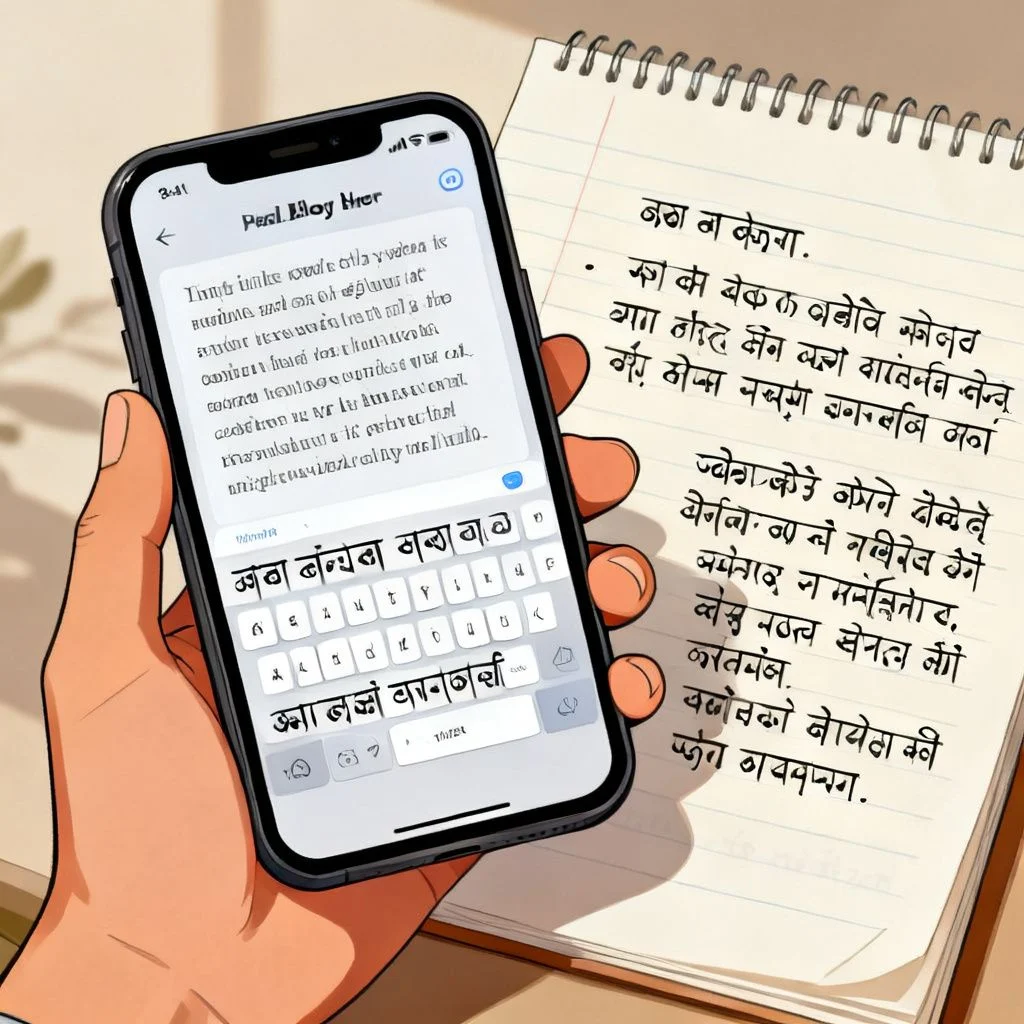
A: Use a transliteration tool like Google Input Tools or the Easy Kannada Typing website. You type words phonetically in English letters (for example, “namaskara”) and the tool converts them to Kannada script (ನಮಸ್ಕಾರ). Most smartphones also have built-in Kannada keyboards that support transliteration input.
Q: What is the best free English to Kannada translation app?
A: Google Translate is the most widely used free option and supports text, voice, camera, and offline translation. Microsoft Translator is a strong alternative, especially if you need document translation or integration with Office apps. Both are free and regularly updated.
Q: Why does my translated Kannada text sound unnatural?
A: Machine translation often produces grammatically correct but stilted output because it does not fully understand context, register, or idiomatic usage. Kannada has formal and informal forms that apps struggle to choose between. Having a native speaker review the output is the best fix.
Q: Can I translate an entire PDF from English to Kannada?
A: Google Translate supports document upload for PDF files through its web interface. Upload the file, select English to Kannada, and download the translated version. Formatting often gets disrupted, so expect to do some cleanup. For professionally formatted documents, consider a human translator.
Q: How do I translate English to Kannada for WhatsApp messages?
A: On Android, you can use Gboard (Google Keyboard) with the Google Translate feature built in. While typing in WhatsApp, tap the Translate option in the keyboard menu, and your English text will be converted to Kannada before sending. On iOS, you may need to copy text to the Google Translate app and paste the result back.
Q: Are there any English to Kannada dictionaries that show multiple meanings?
A: The Shabdkosh online dictionary and the Kannada-English Dictionary app by Nithra provide multiple meanings, usage examples, and pronunciation guidance. These are helpful for understanding which of several possible translations fits your specific context.
References & Further Reading
- Google Translate Kannada Language Support , https://translate.google.com
- Microsoft Translator Language List & Features , https://www.microsoft.com/en-us/translator/languages/
- Kannada Script & Language Resources (Omniglot) , https://www.omniglot.com/writing/kannada.htm
- Central Institute of Indian Languages , Kannada Resources , https://www.ciil.org
—
About This Article: This guide draws on practical experience with translation tools across multiple language pairs, combined with an understanding of Dravidian linguistics and machine translation limitations. The recommendations reflect current tool capabilities as of early 2025 and are intended to help readers choose the right translation approach for their specific context and accuracy requirements.